Invisible Juice: How Crypto Price Swings Between Bet Placement and Settlement Are Silently Eroding Your Edge
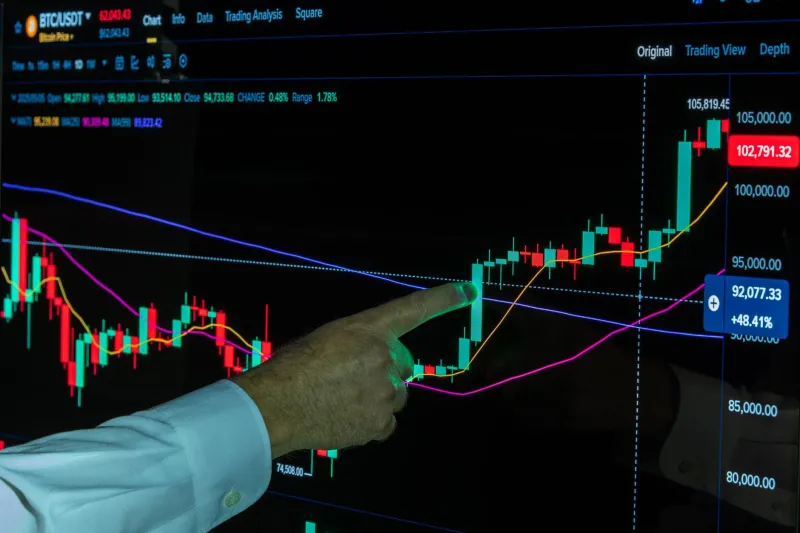
Every serious bettor in the United States understands the concept of juice — the commission baked into sportsbook odds that ensures the house collects regardless of outcome. Sophisticated players spend considerable effort hunting for reduced-vig lines, shopping odds across multiple books, and calculating true implied probabilities with precision. Yet a significant portion of those same bettors are sustaining losses that no amount of line shopping can recover, losses that never appear on a sportsbook ledger and are never attributed to the house. They originate entirely from the asset class used to place the bet.
This is the timing tax: the hidden cost imposed by cryptocurrency price volatility between the moment a wager is submitted and the moment winnings — or losses — are settled back into a wallet.
The Mechanics of a Cost Most Bettors Never Measure
Consider a straightforward scenario. A bettor deposits two Ethereum tokens into a crypto sportsbook when ETH is trading at $3,200. That deposit carries a dollar-equivalent value of $6,400. The bettor identifies a line with genuine positive expected value — a +110 moneyline on a team they believe has a 55 percent win probability. They wager one ETH, or $3,200 in notional terms, and stand to win approximately 0.91 ETH if correct.
The game concludes 48 hours later. The bet wins. Settlement arrives. But ETH has moved to $2,950 during that window — a decline of roughly 7.8 percent. The winning payout of 0.91 ETH is now worth $2,685 in dollar terms, compared to the $3,200 the bettor effectively risked. The bet won. The bettor still lost purchasing power.
Now reverse the scenario. ETH climbs to $3,500 during the same window. The bettor's 0.91 ETH payout is suddenly worth $3,185 — nearly equivalent to the original stake, despite the bet winning at plus-odds. The currency appreciation masked what would otherwise be a visible loss in dollar-equivalent terms.
In both cases, the sportsbook's vig remained constant. The bettor's analytical edge, or lack thereof, remained constant. The variable that determined real-world profitability was entirely external to the betting decision itself.
Why This Problem Compounds for Active Bettors
Single-bet scenarios illustrate the concept cleanly, but the timing tax compounds in ways that become genuinely destructive for high-volume bettors. When a player maintains an open book balance across multiple simultaneous wagers — a common practice among those who bet NFL, NBA, and college sports concurrently — their entire balance is exposed to asset price movement at all times.
A bettor running ten open positions across a weekend of college football is not simply exposed to the outcome variance of ten games. They are exposed to the price trajectory of their chosen cryptocurrency across the entire settlement window for all ten contests. A 5 percent drawdown in ETH across a Saturday of games imposes a 5 percent invisible loss on every dollar of balance held at the book, regardless of how those bets perform.
For players who have spent months refining a betting model capable of generating a 3 to 4 percent return on investment — a genuinely elite performance level — a single adverse weekend of currency movement can consume the equivalent of months of analytical work in a matter of hours.
The Stablecoin Solution and Its Tradeoffs
The most direct response to the timing tax is denominating bets in stablecoins — dollar-pegged cryptocurrencies such as USDC or USDT that maintain a 1:1 value relationship with the US dollar. An increasing number of crypto sportsbooks, including platforms operating in the decentralized space, now accept stablecoin deposits and process settlements in the same denomination.
For a bettor whose primary objective is isolating pure betting alpha — that is, returns attributable exclusively to analytical skill rather than asset price movement — stablecoins represent the cleanest solution available. There is no timing tax because there is no timing exposure. A $500 bet remains a $500 bet from submission through settlement, full stop.
The tradeoff is opportunity cost. A bettor who converts ETH to USDC before depositing surrenders any upside from ETH appreciation during the betting window. For players who hold cryptocurrency as a long-term investment and use a portion of their holdings to fund betting activity, stablecoin conversion represents a deliberate decision to decouple those two financial activities. Some view this as discipline. Others view it as leaving money on the table.
The analytically honest answer is that it depends entirely on the bettor's actual edge in each domain. If a player has a demonstrable, data-supported edge in sports betting and a separate thesis for ETH appreciation, those are two distinct financial positions that deserve to be evaluated — and managed — independently.
Hedging Strategies for Bettors Who Prefer Crypto Denomination
For bettors who prefer to maintain their book balance in native cryptocurrency, partial hedging strategies can reduce timing tax exposure without requiring full stablecoin conversion. The fundamental principle is simple: if a significant open betting position creates meaningful sensitivity to crypto price movement, a proportional short hedge in the futures market can offset that exposure.
As a practical example, a bettor carrying $10,000 in notional ETH exposure across an open weekend of wagers might establish a proportional short position in ETH perpetual futures. If ETH declines, the futures position generates a gain that partially offsets the depreciation of the book balance. If ETH rises, the futures position loses while the book balance appreciates — a near-neutral outcome on the currency dimension, leaving bet outcomes as the primary driver of profit and loss.
This approach requires access to a derivatives platform, a working understanding of perpetual contract mechanics, and careful position sizing to avoid over-hedging. It is not suitable for casual bettors. However, for players operating at meaningful volume with a genuine analytical edge, the cost of maintaining a hedge is often far lower than the cumulative timing tax absorbed across a full season of unhedged crypto-denominated wagers.
Measuring What You Have Actually Been Paying
Before implementing any structural change, every crypto bettor should conduct a straightforward historical audit. Pull the full record of deposits, withdrawals, and settlements from your sportsbook account. Convert each transaction to its dollar-equivalent value at the time of execution using historical price data. Calculate your actual dollar-denominated profit or loss across the entire period.
Then compare that figure to what your sportsbook account balance would suggest if measured purely in crypto units.
For many bettors, this exercise produces a genuinely uncomfortable revelation. Players who believe they are operating at breakeven or modest profit discover they have sustained meaningful dollar losses once currency movement is properly accounted for. Others discover that what appeared to be strong performance was substantially inflated by crypto appreciation during a bull market — a tailwind that will not always be present and should never be confused with betting skill.
Accurate measurement is the prerequisite for accurate improvement. Until a bettor has isolated their true betting return from their currency return, they are navigating with a fundamentally compromised performance record.
The Professional Standard
The most sophisticated participants in any betting market denominate their performance in stable units of account. Professional sports bettors operating in traditional currency environments track every dollar in and every dollar out with precision. The transition to crypto does not change that standard — it raises it, because the additional variable of currency volatility creates new opportunities for self-deception.
Betting smarter, in the truest sense, means accounting for every cost embedded in a wager — including the ones the sportsbook never charges you. The timing tax is real, it is measurable, and for a meaningful segment of crypto bettors in the US market, it is the single largest expense in their entire operation. Treating it as such is not optional for anyone serious about long-term profitability.